10 Questions to Ask Before Hiring a Finish Carpenter in Massachusetts
Natalie Cruz
Marketing & Content Specialist, Hathaway Finish Carpentry
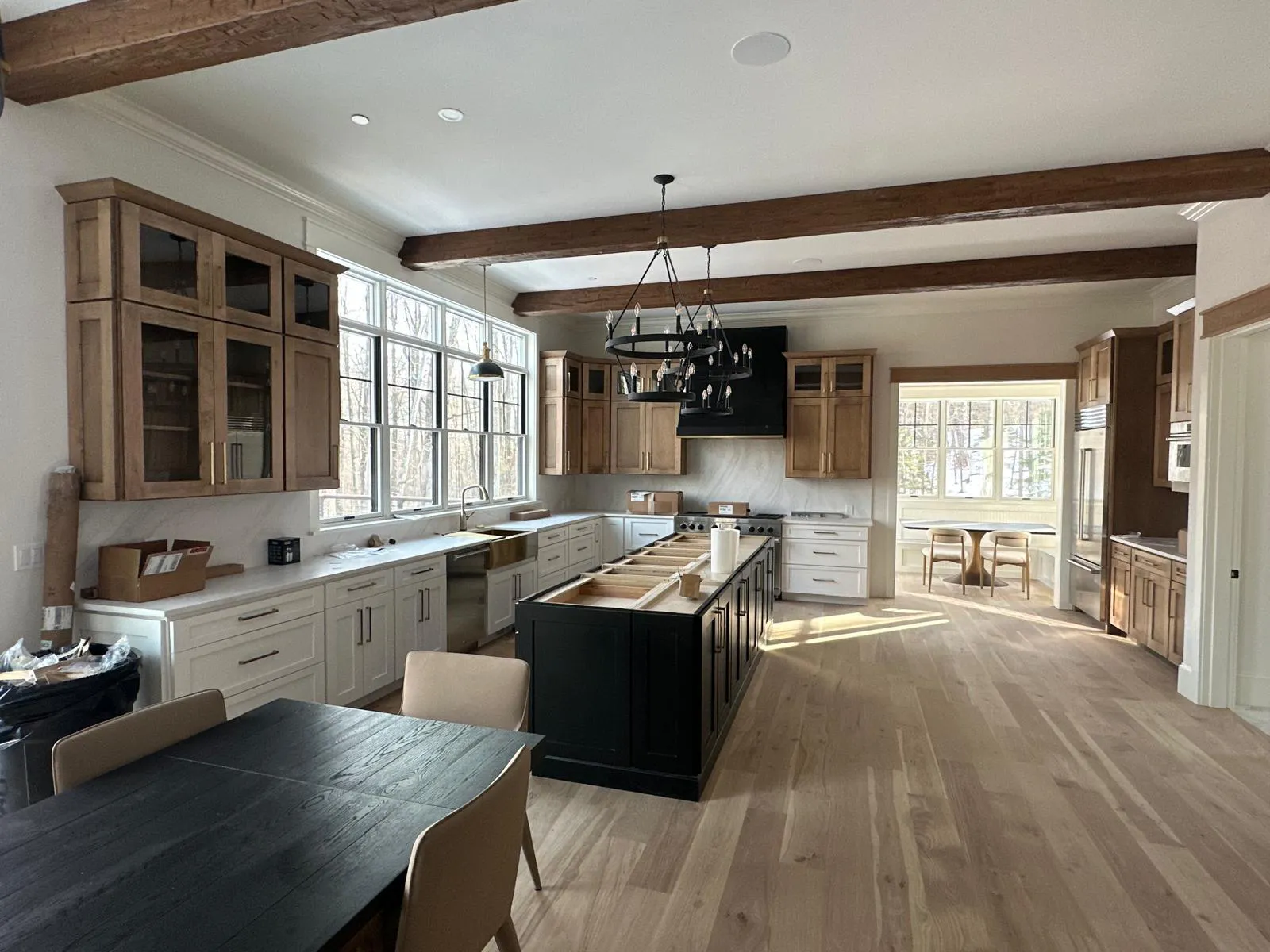
Massachusetts homeowners spend between $3,000 and $50,000+ on finish carpentry projects each year. And every week, we hear from homeowners who hired the wrong contractor — and paid dearly for it. Mismatched trim profiles. Gaps in crown molding. Work abandoned mid-project. A contractor who disappeared after a deposit.
The good news: most of these situations are entirely avoidable if you ask the right questions before you sign a contract. Here are the 10 questions every Massachusetts homeowner should ask — and what a trustworthy answer looks like.
1. Are You Licensed and Insured in Massachusetts?
This is non-negotiable. In Massachusetts, any contractor performing residential work over $1,000 must be registered as a Home Improvement Contractor (HIC) with the Massachusetts Office of Consumer Affairs and Business Regulation (OCABR).
Additionally, contractors must carry:
- General liability insurance (protects your property if something is damaged)
- Workers' compensation (protects you if a worker is injured on your property)
Ask for the HIC registration number and verify it at mass.gov/hic. Ask for a Certificate of Insurance and confirm it's current.
Red flag: Any contractor who hedges on this question, can't produce their registration number, or says insurance "isn't necessary for small jobs" — walk away immediately.
2. Can You Show Me a Portfolio of Similar Projects?
Finish carpentry is a visual craft. A contractor who can't show you before-and-after photos of past work — in your specific style (colonial trim, wainscoting, built-ins, stairs) — hasn't done enough of it to trust with your home.
What to look for: Tight, consistent reveals. Clean coped joints at inside corners. Straight baseboard runs. Crisp paint lines. These details reveal skill level more accurately than any sales pitch.
Bonus question: "Can I speak with a past client in a similar project?" A confident contractor says yes without hesitation.
3. Do You Work With a Crew, or Do You Subcontract?
There's nothing inherently wrong with subcontracting. But you need to know who will actually be in your home doing the work. If the contractor bids the job and a subcontractor you've never met shows up to do the work, the quality control changes.
Ask: "Will you personally be on site during my project, or will it be managed by a lead carpenter?" Either can be acceptable — what matters is accountability.
4. What Is Your Project Timeline?
Get a start date and a projected end date in writing. In Massachusetts, finish carpentry contractors are often booked 4–10 weeks in advance — especially for summer and fall projects. A contractor who can start next Monday on a large project is either not busy (worrying) or squeezing you into a schedule you don't have full visibility into.
Also ask: "How many other projects will you be working on simultaneously while doing mine?" A contractor working 5 jobs at once may make progress slowly, finishing well past the estimated date.
5. Do You Provide a Written, Itemized Estimate?
In Massachusetts, any contract for residential work over $1,000 must be in writing by law. But beyond the legal requirement, a detailed written estimate protects both parties. It should include:
- Scope of work (exactly what is and isn't included)
- Materials specified (wood species, profile, finish)
- Labor cost (separate from materials)
- Payment schedule
- Timeline and project start/end dates
- Change order process
Red flag: A contractor who gives you a verbal estimate only, or a one-line written estimate with no breakdown. This is how scope disputes happen.
6. How Do You Handle Unexpected Issues or Change Orders?
In Massachusetts homes — especially those built before 1980 — surprises happen. Walls that aren't plumb. Floors that have shifted. Existing trim that doesn't match standard profiles.
Ask how they handle this situation before you sign. The answer should involve:
- A written change order process
- A discussion with you before any additional work begins
- A clear cost and timeline adjustment
Red flag: "Don't worry, we'll figure it out" — with no written process to back it up.
7. What Warranty Do You Offer on Your Work?
Quality finish carpentry should stand up to Massachusetts's seasonal humidity and temperature swings — and the contractor should stand behind their work if it doesn't. A reasonable warranty for finish carpentry work is 1 year on labor for defects in workmanship. Some contractors offer longer.
Ask specifically: what's covered, what's not (normal seasonal wood movement, for instance, is not a defect), and how warranty claims are handled.
8. Who Purchases the Materials — You or Me?
There are two common models: the contractor buys materials (marking them up 15–30% as standard practice), or you buy materials at cost and the contractor installs. Both have tradeoffs.
If the contractor buys: they're accountable for correct quantities and quality. If you buy: you save on markup but take on supply chain risk. Either way, the materials specification (brand, profile, wood species, finish) should be explicit in the contract.
9. How Do You Protect My Home During the Project?
Finish carpentry involves saws, nail guns, sawdust, and people tracking through your home. A professional contractor will:
- Use canvas drop cloths or plastic sheeting to protect flooring
- Run dust collection on power tools (especially table saws)
- Seal off adjacent rooms if painting or cutting near painted surfaces
- Clean up at the end of each work day
- Leave a point-of-contact if you're not home
This matters. Projects that span multiple days mean workers are in your home repeatedly. Professionalism in this area reflects their overall quality standards.
10. What Does Your Payment Schedule Look Like?
The payment structure tells you a lot about a contractor's financial stability and honesty. A standard, fair payment schedule for a Massachusetts finish carpentry project looks like:
- 10–25% deposit at contract signing (to secure materials and scheduling)
- 30–40% at project start
- 30–40% at substantial completion
- 10–15% retainage held until final punch list is complete
Red flag #1: A contractor who asks for 50% or more up front. This is how homeowners lose money to contractors who disappear.
Red flag #2: A contractor who asks for full payment upon completion with no retainage. This eliminates your leverage if there are punch-list items.
Bonus: 5 Red Flags That Should Send You Looking Elsewhere
- No physical address or local presence: Legitimate contractors have a traceable business address.
- Pressure to decide immediately: Ethical contractors don't need to pressure you into signing.
- No online reviews or verifiable references: In 2025, an established contractor has a reviewable track record.
- "I can start Monday" on a large project: Booked contractors have lead times. A completely clear schedule can mean a struggling business.
- Cash-only payments: Legitimate contractors accept checks and documented payments for tax and accountability purposes.
"We welcome every one of these questions. The homeowners who ask the hardest questions are usually the most satisfying clients to work with — they know what they want and they understand the investment they're making."
How Hathaway Finish Carpentry Answers These Questions
For full transparency — here's how we at Hathaway respond to each question:
- ✅ Licensed & insured: Massachusetts HIC registration, full general liability and workers' comp coverage.
- ✅ Portfolio: Dozens of documented projects available. References provided on request.
- ✅ On-site presence: Gustavo leads or personally oversees every project.
- ✅ Timeline: Written into every contract. We communicate proactively about delays.
- ✅ Written estimates: Fully itemized, every time.
- ✅ Change orders: Written, approved by client, before any additional work begins.
- ✅ Warranty: 1 year on all labor, defects in workmanship.
- ✅ Materials: Specified in contract. Clients may supply or we source — your choice.
- ✅ Home protection: Full dust containment, daily cleanup, canvas floor protection.
- ✅ Payment: Standard three-milestone schedule with final retainage at punch-list completion.
If you're vetting finish carpenters in Massachusetts right now, we'd love to be on your list. We believe an informed homeowner is the best kind of client — and we'll answer every question on this list, and more.