Wainscoting in 2025: The Classic Detail Dominating New England Interiors
Natalie Cruz
Marketing & Content Specialist, Hathaway Finish Carpentry
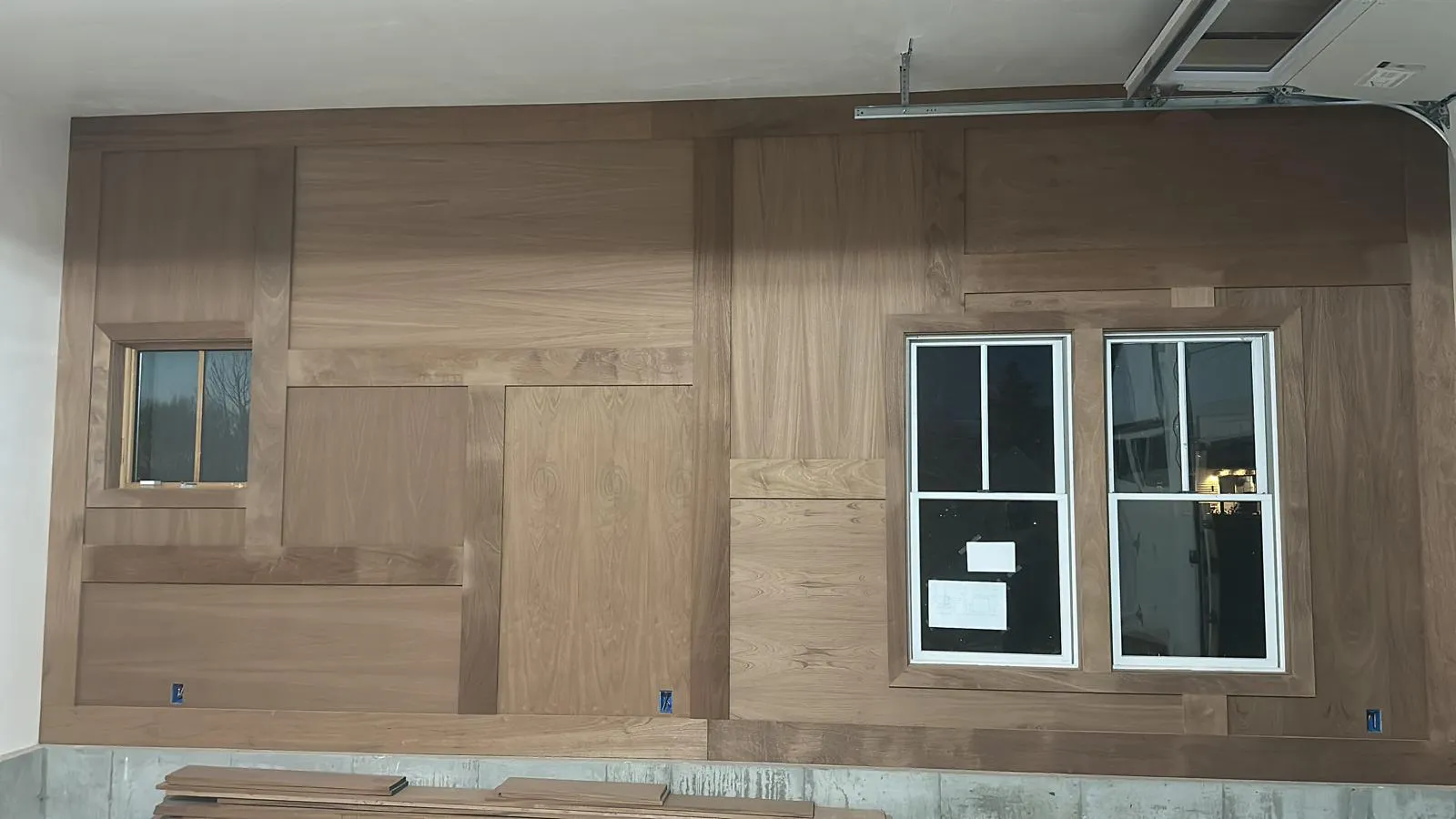
If you've scrolled through any interior design feed in the last 18 months, you've noticed it: wainscoting is everywhere. From board-and-batten farmhouse walls to floor-to-ceiling picture frame paneling in formal dining rooms, this centuries-old millwork detail has returned with a force rarely seen in the finish carpentry world.
But "wainscoting" isn't one thing. It's a family of wall treatment styles — each with its own character, cost, and ideal application. Here's what's happening in New England homes right now, what it will cost you per room, and how to choose the right style for your Massachusetts home.
The 5 Types of Wainscoting (and Which New England Homes They Suit)
1. Board and Batten
Vertical boards spaced evenly apart with narrow strips (battens) covering the seams. Originally a barn construction technique, it's now the dominant wainscoting style in contemporary and farmhouse interiors across New England. The look is clean, linear, and bold — especially when painted in a deep contrasting color.
Best for: Mudrooms, hallways, bedrooms, and staircases. Ideal for Craftsman bungalows and newer construction.
Average cost in MA: $8–$14 per square foot installed.
2. Raised Panel
The classic New England wainscoting. Recessed or raised geometric panels framed by rails and stiles — the kind you see in traditional Colonial, Federal, and Georgian homes throughout Massachusetts. It's more intricate to install than board and batten, requiring precise joinery and consistent reveals. When done right, it looks irreplaceable.
Best for: Formal living rooms, dining rooms, home offices, and entry halls. Essential in pre-1980 Colonial and Cape Cod homes.
Average cost in MA: $14–$24 per square foot installed.
3. Beadboard
Narrow vertical planks with a rounded bead detail at each joint. Historically used in kitchens, mudrooms, and bathrooms across New England — it reads as warm, cottage-style, and unpretentious. It's the most casual of the wainscoting styles, and also among the most affordable.
Best for: Kitchens, bathrooms, mudrooms, back stairways. Excellent in Capes, Colonials, and seaside-style homes.
Average cost in MA: $7–$12 per square foot installed.
4. Picture Frame Molding (Flat Panel)
Rectangular frames made from flat molding applied directly to drywall. There are no structural panels — just the visual illusion of framing created by the molding profile. This is the fastest-growing wainscoting style in 2025 because it's relatively affordable, looks incredibly luxurious when painted in a rich color, and works in almost any architectural style.
Best for: Primary bedrooms, dining rooms, and staircases. Works in both traditional and modern interiors.
Average cost in MA: $9–$16 per square foot installed.
5. Shiplap and Tongue-and-Groove
Horizontal or vertical boards with overlapping or fitted edges — popularized by the modern farmhouse aesthetic and still going strong. Shiplap reads as rustic but can be elevated with the right paint and trim. Tongue-and-groove offers a cleaner, tighter look.
Best for: Accent walls, living rooms, media rooms, master bedrooms.
Average cost in MA: $10–$18 per square foot installed.
What's Trending in New England in 2025
Having worked on dozens of residential projects across Milford, Holliston, Franklin, and the greater MetroWest area this year, our team at Hathaway has noticed several clear trends:
- Tall wainscoting (48–60 inches): Half-height is out. Homeowners are going taller — sometimes floor-to-ceiling — for a more dramatic, architectural statement.
- Dark paint on panels: Deep blues (Benjamin Moore Hale Navy), forest greens (Sherwin-Williams Pewter Green), and charcoals are replacing white-on-white. The contrast against white ceilings and trim is striking.
- Picture frame molding in primary bedrooms: This is the room where we get the most requests right now. It photographs beautifully, adds a hotel-suite quality, and costs significantly less than raised panel.
- Staircase wainscoting: Board and batten running along the staircase wall — often the longest, most visible wall in the home — has become the marquee request of 2025.
- Mixed styles per room: Board and batten in the mudroom, raised panel in the dining room. Homeowners are no longer trying to maintain consistency house-wide — each room gets the treatment that suits it.
Cost by Room: Massachusetts 2025 Estimates
| Room | Avg. Wall Area (sq ft) | Beadboard / Board & Batten | Raised Panel |
|---|---|---|---|
| Hallway | 80–120 sq ft | $640–$1,680 | $1,120–$2,880 |
| Dining room | 120–180 sq ft | $960–$2,520 | $1,680–$4,320 |
| Primary bedroom | 100–150 sq ft | $800–$2,100 | $1,400–$3,600 |
| Staircase wall | 80–140 sq ft | $640–$1,960 | $1,120–$3,360 |
These estimates include materials and labor but exclude paint. For the painted finish to look premium, we strongly recommend a professional painter — wainscoting shows brush marks and drips more than flat drywall.
"Wainscoting is one of the few upgrades where the before-and-after photos genuinely shock people. You think it'll be subtle. It never is."
DIY Wainscoting vs. Hiring a Professional in Massachusetts
Board and batten is genuinely the most accessible wainscoting style for a skilled DIYer. If you have a miter saw, a nail gun, and patience for measuring, a bedroom is achievable over a weekend.
Raised panel and picture frame molding are a different story. The spacing of frames must be mathematically precise — an uneven reveal between frames looks far worse than no wainscoting at all. Corners require careful coping. And in older Massachusetts homes where walls are rarely plumb, compensating for out-of-square conditions requires experience.
Our honest recommendation: if you want it to look like a feature, hire a professional. If you're willing to accept "good enough," DIY is a reasonable choice for simpler styles.
How to Choose the Right Wainscoting for Your Massachusetts Home
- Consider your home's era: A 1965 Colonial calls for raised panel. A 2010 farmhouse-style build calls for board and batten. Don't force a style that conflicts with your architecture.
- Match existing trim profiles: If you have colonial baseboard and casing, your wainscoting rail and cap should use similar profiles. Mismatched profiles look like an afterthought.
- Commit to the height: Taller is almost always better (48 inches minimum; 54–60 inches for formal rooms). Short wainscoting in a room with 9-foot ceilings looks squat and miserly.
- Paint is part of the design: Choose your paint color before installation, not after. The carpenter needs to know the reveal depth and whether you want caulk before or after paint.